
Home » Heavy Menstrual Bleeding (Menorrhagia)
If you regularly soak through pads or tampons, pass large blood clots, or feel fatigued, you could be suffering from menorrhagia. While many women tolerate heavy periods for years, it should not be considered normal.
At Daniel Koh Clinic, we investigate why menorrhagia occurs and offer personalised, evidence-based treatment. From medical therapy to surgical procedures, we manage symptoms of menorrhagia and aim to restore your quality of life.
Heavy menstrual bleeding, also known as menorrhagia, refers to periods that are unusually heavy and/or prolonged. It can lead to excessive blood loss, disrupt daily life, and sometimes signal a serious gynaecological issue.
In the past, menorrhagia was defined as losing more than 80 ml of blood per cycle. Today, any period that causes anaemia, requires changing sanitary pads/tampons every 1 to 2 hours, or interferes with work, school or social life should be investigated by a gynaecologist.
A typical menstrual period can last up to seven days. It should not soak more than two pads within an hour or force you to change protection during the night. Excessive bleeding can appear at any reproductive age, but is seen most often just after the first periods begin and in the forties.

You soak through two or more pads or tampons within an hour, need to double-up protection, or notice “flooding” that forces you to change clothes or bedding.
You pass clots larger than 2cm. This signals that blood is pooling in the vagina before it can be passed out.
If you need to set alarms to change protection at night, carry spare sanitary supplies with you everywhere, or restrict travel due to issues with toilet access, then your flow is heavier than usual.
Ongoing blood loss lowers iron stores and haemoglobin levels. Anaemia can present as fatigue, shortness of breath on mild exertion and dizziness.
The womb contracts harder to expel a thick endometrial lining and blood clots, leading to pelvic cramps. The pain is often worse on days with heavy menstrual flow.
Heavy menstrual flow can disrupt your daily life. When menstruation regularly forces you to reorganise activities or stay near a bathroom, it is time to seek medical advice.
If you experience any of the following, you may have heavy menstrual bleeding:
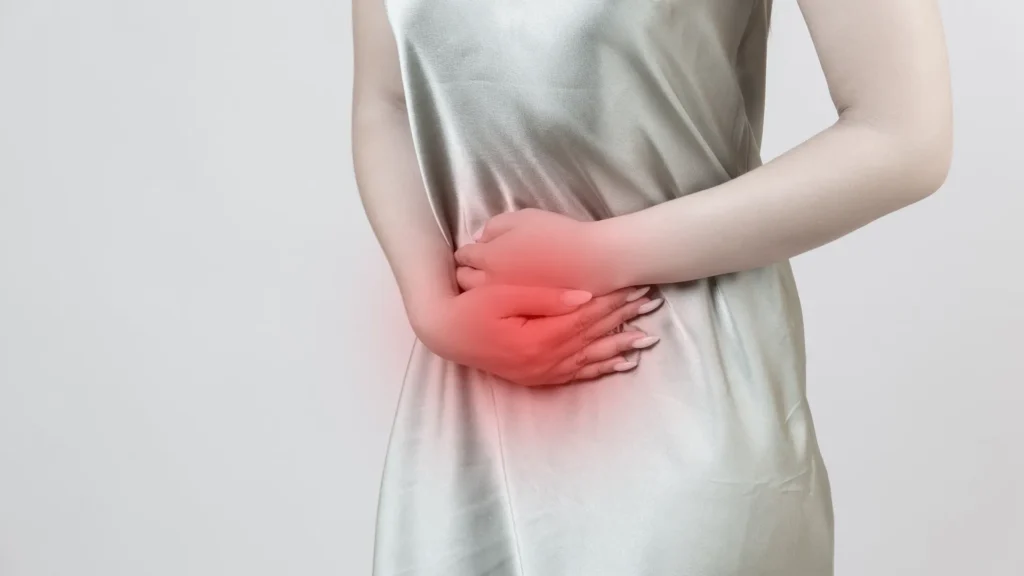
Other factors that may contribute to heavy menstrual bleeding include:
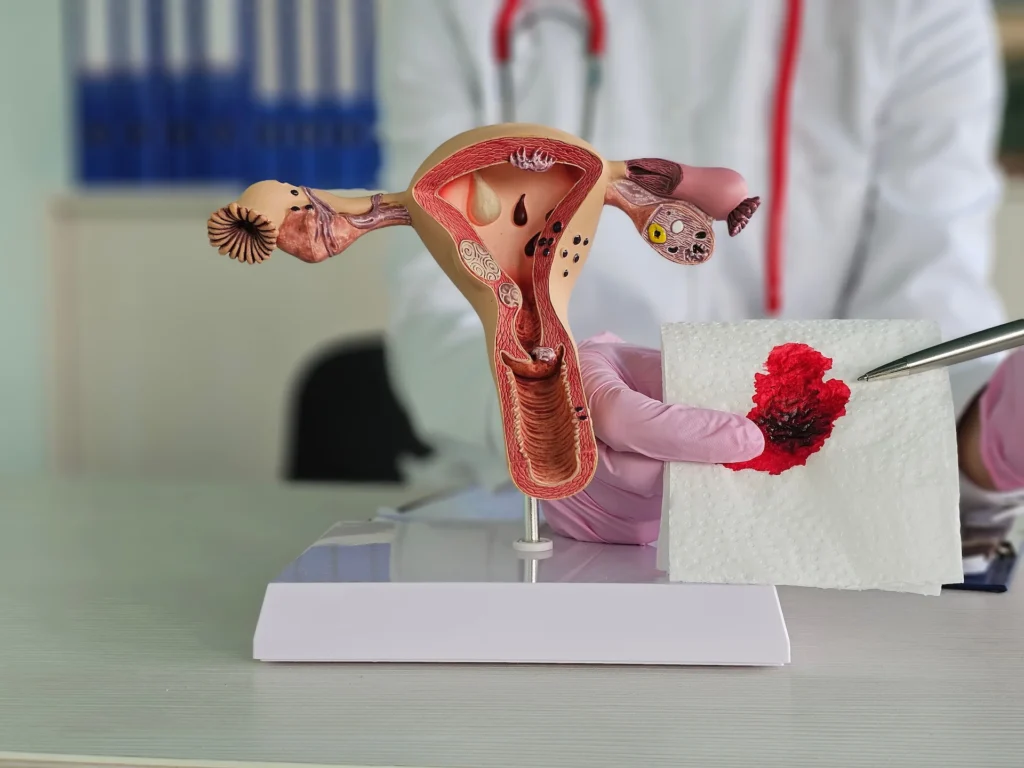
Your gynaecologist will take a detailed medical history and conduct laboratory and radiological investigations to diagnose menorrhagia and identify any potential underlying cause.
You may be asked:
You may be offered the following Investigations:

Maintaining a healthy weight/body mass index, managing stress, exercising regularly and eating iron-rich foods support medical treatment and may lessen symptoms over time.
Heavy bleeding can deplete iron stores and lower haemoglobin levels. Oral iron supplementation or an intravenous iron infusion can help restore iron stores and improve energy levels when iron levels are low.
Under anaesthesia, the cervix is dilated and a scope with a camera attached is inserted into the womb to assess the inside of the womb. A thin layer of the inner lining is then removed or suctioned. D&C can stop acute heavy bleeding and also provide tissue for laboratory testing. Please read our blog article.
A device emitting heat, radiofrequency waves or laser energy is inserted into the womb to reduce the womb’s lining. Period flow may become lighter or stop altogether.
Hysteroscopic, laparoscopic (keyhole) or open pelvic surgery can be performed to remove fibroids that cause menorrhagia. This option is suitable for women who wish to preserve fertility or avoid a hysterectomy.
The uterus, and usually the cervix, is surgically removed. This surgery is reserved for situations where all treatments have failed and women who have no more plans for children.
Treatment for menorrhagia can be individualised by your age, plans for pregnancy and the extent to which the bleeding affects your quality of life.
Your specialist may perform a diagnostic hysteroscopy to determine the cause of abnormal bleeding. Hysteroscopy allows your specialist to see the inside of the womb to diagnose fibroids, polyps or suspicious lining. Tissue is sampled to exclude serious conditions such as womb cancer.
D&C clears the thickened lining and often reduces bleeding for several cycles. However, it does not remove underlying problems such as fibroids that are not in the womb’s cavity, adenomyosis or hormonal imbalance. Ongoing management, such as through medication, hormonal devices or surgery, may still be required.

Don’t let heavy periods control your life. Book a consultation with Dr Daniel and take the first step towards normal menstrual cycles.
Obstetrician & Gynaecologist Singapore
BMBS (AUS), M.MED (O&G, SG), FRCOG (UK), FAMS (SG)
Dr Daniel is a specialist obstetrician and gynaecologist with dual subspecialty interests in reproductive medicine and maternal-fetal medicine.
He received his specialist training at the largest Women’s Health hospital in Singapore – KK Women’s and Children’s Hospital.
Combining his subspecialty interests of reproductive medicine and gynaecology, Dr Daniel provides evidence-based management of menstrual disorders, ranging from medical to surgical intervention.
Dr Daniel completed his medical education from the prestigious Flinders Medical School and holds medical registration in Australia. He has won multiple awards for his exemplary performance and received numerous compliments from patients for his genuine care.

Providing a comprehensive suite of services to prioritise your needs and comfort at every step of the way in your fertility journey.
Antenatal care & delivery, maternal & fetal medicine including high-risk pregnancies and fetal screening

Abortion, family planning, abnormal Pap smears, fibroid and ovarian cyst management


Heavy menstrual bleeding (menorrhagia), prolonged menstruation, intermenstrual bleeding, painful menstruation (dysmenorrhea), post menopausal bleeding

Below are concise answers to questions women often ask about heavy periods and their treatments. For personalised professional advice, book an appointment with our gynaecologist, Dr Daniel.
Book a consultation if you notice any of the signs below:
Yes. Persistent blood loss depletes iron stores and lowers haemoglobin levels, leading to tiredness, dizziness and shortness of breath. A blood test can confirm the diagnosis of anaemia and guide treatment.
Yes, menorrhagia can reduce fertility potential. If left untreated, it can affect the chances of conceiving and increase the risk of having a miscarriage.
A dilation and curettage is considered when menorrhagia persists despite medical treatment. It is also indicated if menorrhagia presents in women aged 40 and above.
Hysteroscopy is performed under general anaesthesia. Women do not usually experience pain during the procedure. Most women experience minimal discomfort after the procedure. Common symptoms include mild pelvic cramps and light vaginal bleeding lasting for a few days post-procedure. Most women can return to their usual activities within a few days.
Our friendly team is looking forward to serving you. For urgent enquiries and appointment requests, please call or WhatsApp us directly.